Sorivaleon
Meet Our Crew
The sparks, the disagreements, the breakthroughs — here’s what goes into our string art practice.
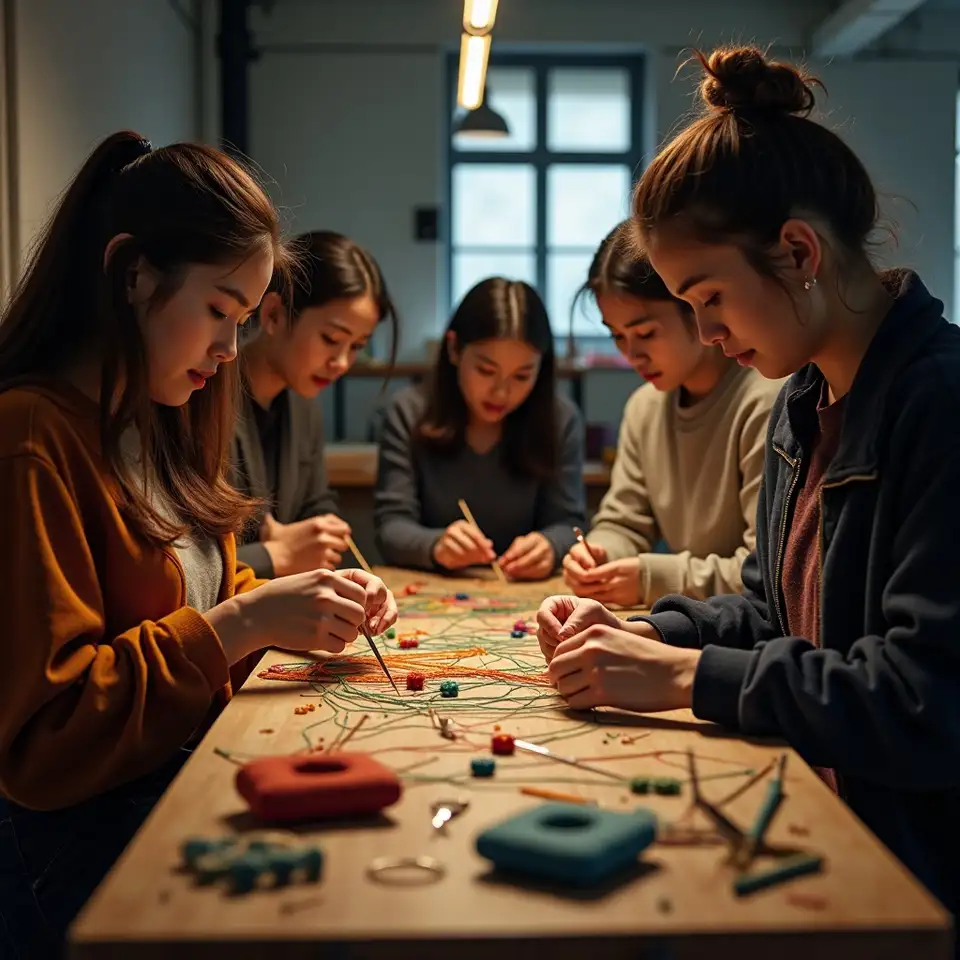
We build string art with restless hands and restless questions. The rules are just a place to start, not a finish line.
Why We Break the Standard Mold
Rely on templates? Not us. Each project starts with a problem, not a finished picture in
mind.
Our technical team handles process breakdowns. Each phase, from prepping boards to
testing nail patterns, gets a critical review. If it’s not working, we tear it down
and start over.
String art is rarely a straight line from vision to outcome. We document friction points, accidental discoveries, and the reasons why we ignore convention. This is how our method stays alive.
We value peer review. Sharing rough drafts and failed prototypes invites honest
critique, which shapes future work more than applause ever could.
Think string art is just kids’ crafts? Think again. We see a challenge worth taking
apart and rebuilding from the ground up.
We approach each project with skepticism. If an instruction feels too easy, we
push until we find the hard edge. That edge is where learning happens.
No two team members use thread in the same way. We swap approaches, test wild color combos, and borrow tricks from unexpected places.
The reward isn’t the final photo—it’s the set of problems solved along the way.
Our best work shows its rough edges. That’s how we know it’s ours.
Our Story
Measure. Hammer. Wrap. Unravel. We repeat, knowing each time the outcome shifts. The
string pulls us forward, but the process drags us sideways. No two builds are
identical—intentional or not. Our commitment is to that messy space between idea and
result.
Perfection isn’t the goal. The point is to experiment, to test boundaries, to let form
emerge from friction. That’s where craft meets defiance.
We trade design secrets, not because they’re precious, but because sharing is the only
way new ideas take root. Each team member brings their own design background, from
engineering to fine art, and that mix keeps our process sharp.
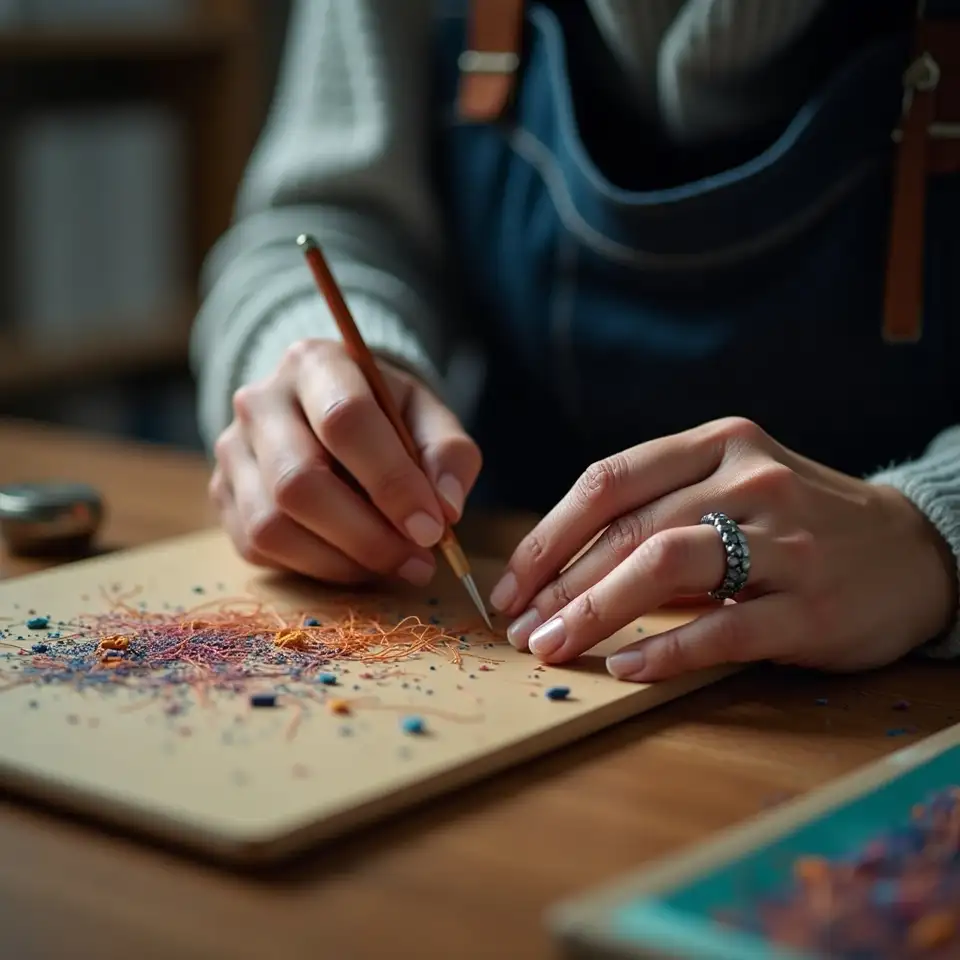
The Principles That Guide Our Approach
If string art feels too easy, we haven’t pushed far enough. Our philosophy is built on tension—between intention and accident, order and chaos, theory and hands-on action.
We welcome debate and value honest feedback above quick praise
Every team member comes from a different background, but we agree on one thing:
finished pieces matter less than what we learn making them. Progress is built on
critique and self-doubt, not just applause.
Predictability is a warning sign, not a comfort
If the pattern looks too predictable, we change direction. Surprise matters. It’s the difference between decoration and discovery. Our favorite designs didn’t go according to plan.
We let materials dictate the rules as much as our ideas do. A bent nail or a fraying thread isn’t a failure, but a signal to adapt. Flexibility in process breeds genuine creativity.
We think craft should provoke, not pacify. Our string art aims to spark questions:
What’s holding this together? Why this shape, not another? Curiosity keeps the
practice alive.
Curiosity. Contradiction. Compromise. Every build starts with these and rarely ends where we planned.
In our workshop, chaos isn’t a problem—it’s a resource. Tangled thread, bent nails, abandoned sketches. These are clues, not waste. The most unexpected results come from letting accidents drive the next move.
We challenge ourselves to unlearn habits. Just because a method is fast doesn’t mean it’s right for the material. Each piece earns its shape by resisting the easy way out.
We draw inspiration from outside our niche. Architectural lines, old math notebooks,
even street grids in our city—anything can be a springboard for a new string pattern.
How We Work as a Collective
We started out questioning why so many crafts look alike. What if string art could be more than a tidy pattern pinned to a board? Our answer: break the rules, trust your hands, document what happens. Here’s what that looks like day to day.
Trial. Error. Iterate.
We prefer process over perfection. Mistakes aren’t wasted—they’re data for the next round. We stay curious about what thread and tension can do, even if it means backtracking.
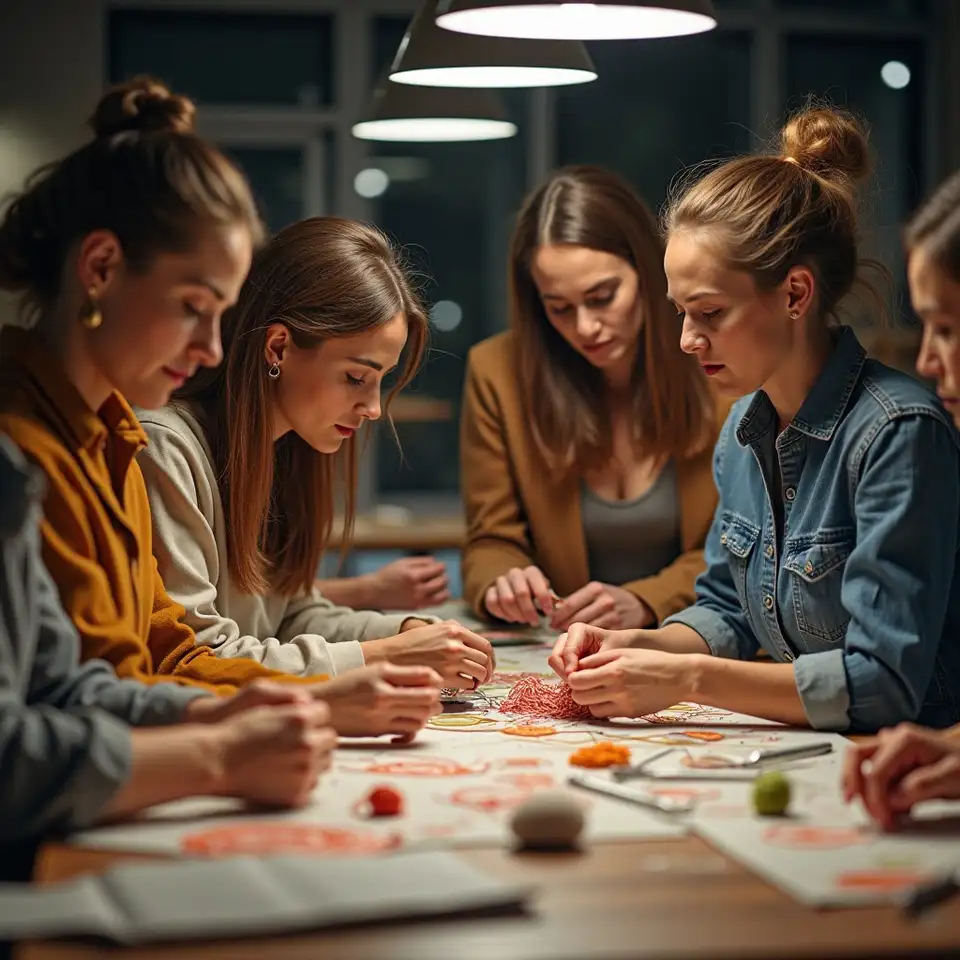
What Drives Our Team’s Process
Principles, not patterns
Nails. Thread. Board. Simple ingredients. Most see a weekend project. We see the tip
of an iceberg. Every line, every knot, carries a decision. Over-engineer or let go?
Use what the market hands you, or tear it apart and start fresh? Our team rejects
cookie-cutter designs. Each piece grows from a why, not a what. We sketch, then
throw half of it away. Method matters more than habit. Mistakes teach more than
quick wins. We debate tension, alignment, negative space. We care how light bends
across the thread. It's not about creating pretty objects. It's about
questioning what makes structure beautiful. That’s how we approach string art – as a
test, as an argument, as a practice. Our inspiration? Geometry textbooks, urban
geometry, vintage tools, childhood boredom. We share techniques, failures, odd
materials, and the stories behind them. For us, string art is a daily rebellion
against sameness. Not everyone gets it. That’s fine. The challenge is what draws us
back.